In an Ataxia UK funded project, Dr Maria Cairney and Prof Anja Lowit at the University of Strathclyde are developing audio messages to support people with ataxia whilst making phone calls. People with ataxia can experience difficulties with their speech, and can find it hard to make themselves understood on the phone. In addition, they can sometimes have difficulties understanding what others tell them. This article describes the first part of the project, in which the researchers used a survey to ask people with ataxia about their experiences calling different services on the phone and asking for adjustments to make the phone calls easier (known as self-advocacy).
In the survey, the researchers asked people if they would be interested in an audio tool (like the physical Ataxia ID card) that could help with self-advocacy on the phone. They also asked participants what functions they think such a tool should have.
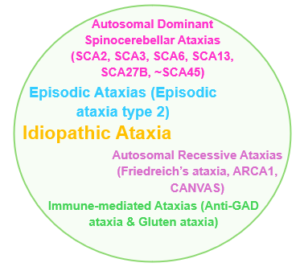
33 responses were analysed, from people aged 25-88, with a range of ataxias, as pictured to the left.
97% of participants said they would be interested in an audio tool to help with self-advocacy on the phone. Over half of the participants (52%) said it is either quite hard or very hard to make themselves understood when making a phone call. 60% do not feel very confident asking for adjustments, and some wrote that they prefer to ask their partners to make the phone calls on their behalf.
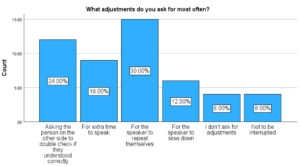
Some of the most common adjustments that participants ask for, as shown to the right, are to be given extra time to speak (18%), and for the person on the other side to double check if they have understood them correctly (24%), as well as to repeat themselves (30%) and slow down (12%) to make them easier to follow.
Those that responded to the survey would like a tool to mention that their speech might be hard to understand and to include an instruction for the other person (e.g., to double check their understanding). Participants were roughly split between whether they want the tool to mention ataxia or not, as shown below.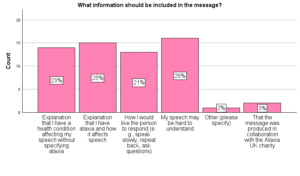
The researchers are now working with people with ataxia to refine different versions of the message that the tool should include. The next stages of the project include testing an early version of the tool and understanding the experiences of people with ataxia when using it. Thank you to Friends of Ataxia UK that completed the survey for this project. Your input and experiences are highly valuable to guide research projects such as this one.
Read more about this project here.